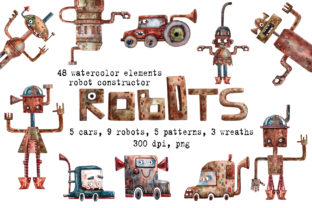
Robots Watercolor Clip Art Set: A Versatile Illustration for Modern Branding
As a brand designer and content marketer with years of experience in visual storytelling, I’m always on the lookout for graphic design assets that balance creativity with professionalism. When I first saw the Robots Watercolor Clip Art Set, I was immediately drawn to its soft, whimsical style. The illustrations exude a playful yet polished vibe that feels perfectly suited for brands aiming to blend innovation with approachability. This isn’t just another clipart collection—it’s an illustration set that could easily become a cornerstone of your creative toolkit.
A Playful Mood That Builds Audience Connection
The watercolor aesthetic of this design bundle brings a sense of warmth and personality often missing in digital illustrations. While robots are typically associated with cold, technical imagery, the hand-painted quality here softens their appearance, making them feel more like curious characters than machines. This emotional tone is ideal for lifestyle brands, edutainment platforms, or any business targeting younger demographics or creative professionals who appreciate artistry and uniqueness.
For a small business launching a tech-inspired product line—like smart home accessories or educational STEM kits—the Robots Watercolor Clip Art Set can help communicate innovation in a friendly, accessible way. It avoids the sterile look of many digital robot graphics while maintaining a professional edge that supports serious branding efforts.
Practical Applications Across Marketing Channels
One of the strengths of this illustration set lies in its adaptability. Whether you’re designing social media graphics, refreshing a brand identity, or creating packaging inserts, these watercolor robots offer flexibility without compromising visual cohesion. Here’s how they perform across different marketing applications:
- Brand Identity: These illustrations can serve as supporting elements in a larger brand system. They work especially well with brands that want to express creativity, futurism, or community through visuals.
- Logo Design: While not suitable as standalone logos, the robots make excellent complementary icons for logo systems, particularly when paired with modern typography.
- Packaging Design: Their organic shapes and muted colors fit seamlessly into eco-friendly or artisanal packaging designs. Use them as subtle accents to suggest a blend of tradition and technology.
- Product Labels: Add charm to product tags or stickers by incorporating smaller versions of the robots. They can represent features like automation, connectivity, or fun learning aspects.
- Social Media Graphics: From Instagram posts to Pinterest pins, the illustrations add visual interest without overwhelming the viewer. Their soft edges help maintain a clean aesthetic even in high-traffic feeds.
- Digital Ads: For Facebook ads or Google banners promoting tech-based products or services, these robots can act as eye-catching but non-distracting elements that enhance storytelling.
- Blog Headers: Use them to introduce articles about AI, robotics, or future trends in a visually engaging yet professional manner.
- Email Banners: Create branded email templates with hero sections featuring the robots. Their whimsy helps keep the tone light while still looking trustworthy.
- Editorial Design: Ideal for magazines, newsletters, or blog layouts focused on education, creativity, or lifestyle topics related to technology.
- Lead Magnets & Media Kits: Incorporate them into freebie PDFs, lead magnets, or media kits to elevate the visual appeal and make the content feel curated and intentional.
- Canva Templates: If you're building templates for clients or your own content calendar, these illustrations bring a touch of personality that stands out in a sea of flat vectors.
Supporting Stronger Campaign Visuals and Brand Recognition
Using the Robots Watercolor Clip Art Set strategically can significantly improve your campaign visuals. The soft color palette allows for easy integration into most brand schemes, helping maintain visual consistency across platforms. By using these illustrations in multiple formats—SVG design for scalability, PNG for transparency—you can ensure they look great whether printed on merchandise or displayed online.
From a marketing perspective, the set supports stronger first impressions by introducing a unique visual language. It helps establish clearer visual hierarchy in designs, guiding the audience's attention toward key messages. Over time, repeated use of these characters can foster stronger recognition and emotional connection, especially among audiences who value aesthetics over pure functionality.
Where These Illustrations Shine Brightest
Here are some standout use cases where the Robots Watercolor Clip Art Set truly elevates the final output:
- Hero Graphics: Place a large robot illustration behind a headline to create a memorable focal point that feels both inviting and forward-thinking.
- Campaign Headers: These illustrations add a layer of storytelling to your headers, making them more engaging and less corporate.
- Product Launch Visuals: Use them to highlight new features or innovations in a way that’s informative yet visually appealing.
- Branded Canva Templates: They bring life to stock templates, making your design assets stand out in a crowded creative marketplace.
- Social Media Covers: Perfect for Instagram covers, Facebook page banners, or YouTube thumbnails where you need something catchy but not cluttered.
- Packaging Accents: Pair them with minimalist packaging for a pop of character without detracting from the main product.
- Printable Promotions: Use them in printables such as flyers, posters, or stickers to create shareable, decorative brand elements.
- Editorial Layouts: Great for adding visual breaks in long-form content or to illustrate concepts in a magazine-style format.
Limitations and Cautions for Brand Designers
While the Robots Watercolor Clip Art Set is highly versatile, it’s not universally applicable. There are certain contexts where these illustrations may not be the best fit:
- Formal Corporate Branding: The casual, artistic style might clash with the traditional, clean look expected in financial, legal, or enterprise environments.
- Dense Information Layouts: Avoid using them in data-heavy infographics or reports where clarity takes precedence over creativity.
- Small Mobile Graphics: In tiny ad sizes or mobile banners, the intricate watercolor details may get lost, reducing their effectiveness.
- Low-Contrast Backgrounds: Their softer tones can fade if placed against pastel or monochrome backgrounds without careful contrast management.
- Overly Minimal Brands: For brands with strict minimalism, the added texture and detail of watercolor may feel too busy.
- Text-Heavy Ads: Let these illustrations complement rather than compete with important copy to avoid visual confusion.
Always test how the illustrations pair with your brand fonts—serif, sans serif, script, display, or handwritten styles. Their organic feel works beautifully with script and handwritten fonts but should be balanced carefully with bold display types to avoid clashing styles.
Designer Notes for Implementation
Before committing to using the Robots Watercolor Clip Art Set in your next project, consider the following practical steps:
- Test with Your Brand Color Palette: Adjust the hues or overlay tint layers to match your brand’s existing color scheme.
- Check Black and White Usage: Confirm that the illustrations retain enough definition when desaturated for print or grayscale displays.
- Place in Real Campaign Mockups: See how they perform alongside real headlines, CTAs, and brand elements before finalizing designs.
- Preview on Mobile Screens: Ensure legibility and impact on smaller devices, especially for digital product visuals or ads.
- Review Readability in Small Sizes: Simplify or scale down the illustrations if used in micro-interactions or compact UI elements.
- Compare Against Competitor Visuals: Evaluate whether this asset gives your brand a distinct advantage in terms of visual recall and engagement.
- Confirm Commercial Licensing: Always verify that the asset comes with a commercial license before using it in paid campaigns, client projects, or branded materials.
- Balance Spacing and Weight: Use negative space effectively around the robots to prevent clutter and maintain visual harmony.
Why This Is a Must-Have for Creative Entrepreneurs
For small business owners, bloggers, publishers, and digital sellers, the Robots Watercolor Clip Art Set offers a fresh take on what a graphic design asset can do. It bridges the gap between handmade and digital, making it easier to create visuals that feel authentic and modern at the same time. Whether you're preparing a seasonal promotion or crafting a content marketing kit, this illustration set provides a cohesive way to inject character into your message.
Its ability to support both premium and casual branding makes it a rare find in the world of design bundles. You can use it to create charming event flyers or sophisticated web headers—depending on how you layer and apply it. As a result, it becomes a powerful tool for creative entrepreneurs looking to build strong visual identities that resonate emotionally and professionally.
Final Thoughts on Using This Illustration Set
In conclusion, the Robots Watercolor Clip Art Set is a standout illustration resource for anyone working in content marketing, brand design, or visual communication. Its unique style blends playfulness with professionalism, offering a compelling alternative to standard digital illustrations. However, success depends on thoughtful implementation—considering spacing, font pairing, and context to ensure the asset enhances rather than distracts.
If you’re looking for a design asset that adds personality to your marketing visuals without sacrificing polish, this set is worth exploring. Just remember to align it with your brand voice and audience expectations. With the right approach, it can become a signature element in your visual strategy, helping your brand stand out in today’s competitive creative landscape.